 |
||
|
||

Home > TERATEC FORUM > Workshops > Workshop 4
 |
The essential meeting place for all digital players Simulation . HPC/HPDA . Artificial Intelligence . Quantum Computing |
Workshop 04 - 9:00 am to 11:00 am |
Chaired by Christelle Piechurski, Scientific Program Manager, Nvidia and Stephane Requena, Directeur Technique & Innovation, GENCI
Surface Radars at Thales, Life on the Far Edge
By Lionel Matias, Processing Architect for Surface Radars, Thales Land and Air Systems
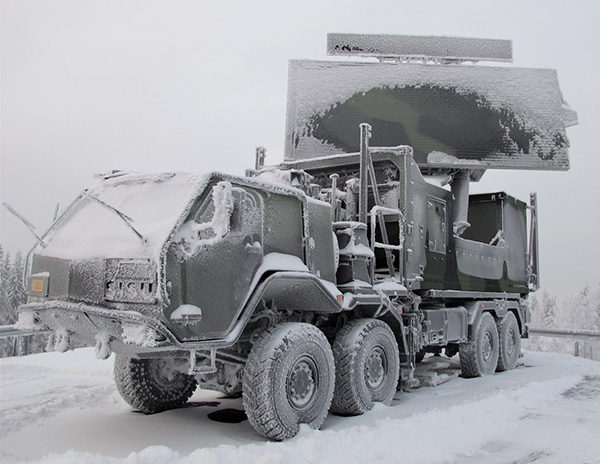 |
Surface radars are cyber-physical systems that autonomously produce and process a large amount of sensor data, in the order of terabits every second. This data deluge prompts the need for a large amount of computing power to extract an air picture in real-time, and within tight latency constraints. Due to the nature of the tactical field of operation of surface radars, streaming that amount of data to a remote computing facility (be it cloud, supercomputer or edge datacenter) is not practically feasible today, so the necessary computing power must be brought next to the actual sensor. This talk explores the constraints of running real-time HPC loads on the far edge, the trends at this extreme of the compute continuum, how similar and different surface radars are to classical HPC systems and to the more challenging data-ingestion HPC systems. It also shows where HPC already helps during systems development (simulation and digital twins, verification and validation of software-based systems, more recently in AI training) and where it is going (deeper integration of AI, simulation tools and operational software) and the challenges of using bigger systems such as large public HPC systems and AI factories. |
 |
Biography: Lionel is a CS Engineer from Polytech Saclay (2007) and has been contributing to the design and implementation of surface radars within Thales for 18 years. He has acquired considerable experience in most domains related to radar design: embedded software engineering, real-time systems, the implementation and optimization of signal and target processing (including with AI), radar scheduling, network design, Linux kernel internals, cybersecurity, safety-critical design, virtualization and radar processing architecture in general. He’s contributed publications to domains such as formal methods and fuzzing, high-performance computing, and holds a patent on radar design. Since 2021 he’s spearheaded within Thales an effort to adopt more HPC technologies in radars, such as GPUs and Terabit networking, in fruitful collaborations with l’Observatoire de Paris, including co-supervising several PhDs. |

To participate in this workshop, please register on the Teratec 2026 Forum website >>>>